
Old Decks Removed Without the Hassle
Deck removals in Manchester for rotting structures, loose boards, or outdoor spaces reclaimed from deteriorating wood framing
Bin N' Out Junk Removal handles deck removal in Manchester for homeowners dealing with structures that have become unsafe, unsightly, or simply in the way of better outdoor use. A deteriorating deck often signals more than cosmetic wear—soft spots underfoot, rusted fasteners, and splintered boards are the visible signs that a structure has reached the end of its serviceable life. The teardown, debris sorting, and haul-away process is handled in a single visit so your yard is cleared the same day the crew arrives.
Deck removal involves more than pulling boards apart. Depending on how the original structure was built, crews must detach ledger boards fastened to the home's exterior, cut or unbolt footings from concrete anchors, and separate pressure-treated lumber from composite decking or hardware before loading. In Manchester, where freeze-thaw cycles work on fasteners and footings every winter, posts often require additional extraction effort because frost heave can push them deeper or crack the surrounding concrete. Each material type is sorted at the point of removal to determine what goes to a recycling facility versus a disposal site.
Schedule a property walkthrough with Bin N' Out Junk Removal to assess the structure size and plan a removal date that clears your yard completely.
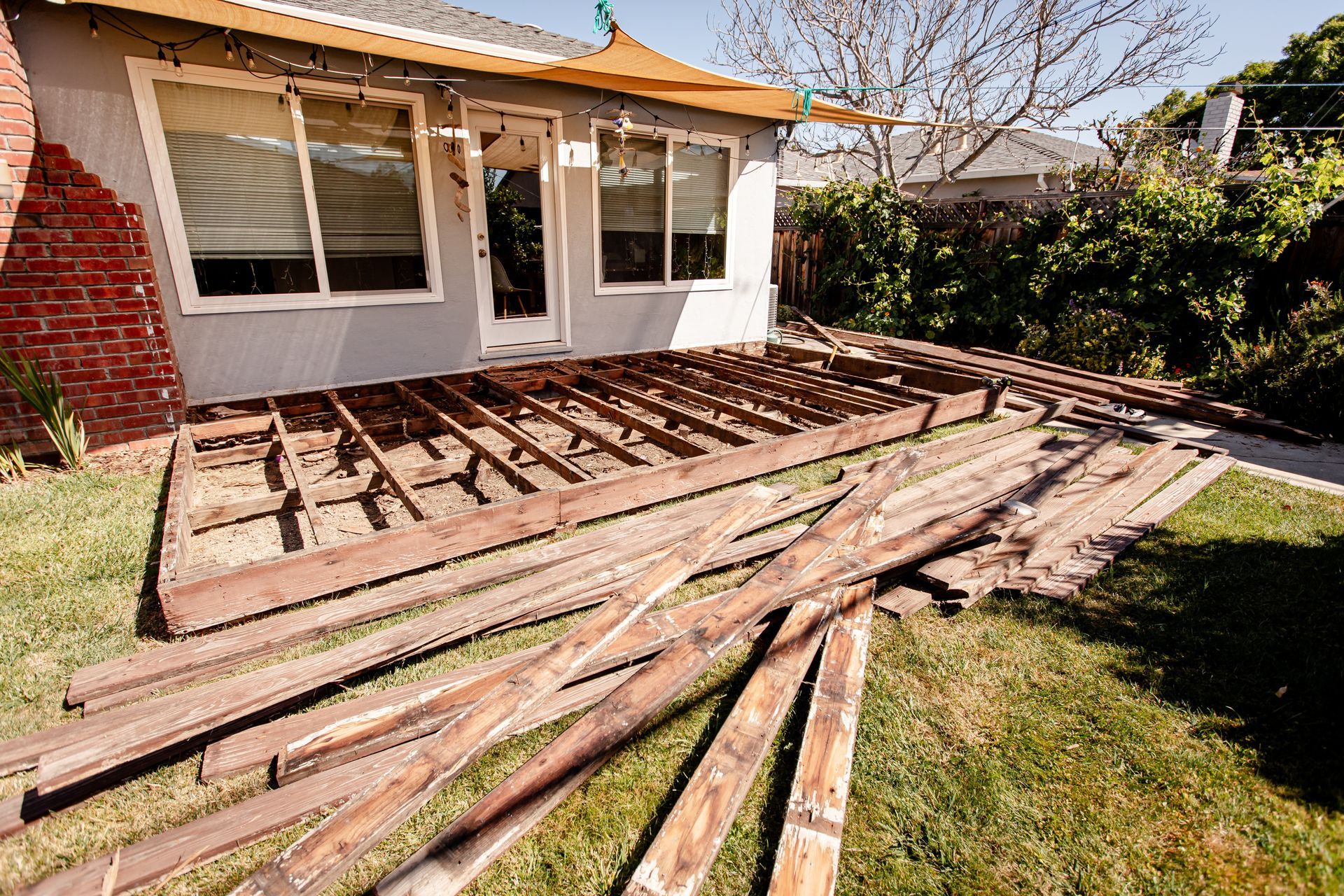
What Deck Removal Actually Accomplishes
The process begins with a site evaluation to identify how the deck is attached to the house, what footing system was used, and whether any utility lines run beneath or adjacent to the structure. This step determines the order of disassembly—removing railings and decking boards first, then the frame, then the posts and footings—so no single load of debris becomes unmanageable. Hardware, nails, and metal brackets are collected rather than left in the soil or lawn.
Once the structure is down and debris is cleared, what you'll notice is a flat, open ground area where the deck once stood—no post stubs poking up, no concrete collars left above grade, and no piles of boards stacked against the fence waiting for a future trip. The exterior wall where the ledger board attached will be visible and can be inspected for any moisture damage that was hidden behind the framing. That kind of visibility is often the first step homeowners take before planning a patio, lawn extension, or new construction.
The scope of removal can vary based on deck size, whether the footings need to be fully extracted or cut flush with grade, and whether any attached pergolas or built-in benches are part of the structure. These factors affect both the time required and how the debris is categorized for disposal, so discussing the full scope before work begins keeps the process straightforward.
Common Questions About Deck Removal
Homeowners in Manchester frequently have questions about what the removal process covers and how to prepare the area beforehand. The following addresses the most common points before scheduling begins.
What preparation is needed before the crew arrives?
Clear any furniture, planters, or stored items from the deck surface and the area beneath it so the crew can access all connection points without delay.
How are the footings handled during removal?
Footings can be extracted fully or cut below grade depending on your plans for the space—if new construction is going in, full extraction is typically the better approach.
Why does freeze-thaw weather in Manchester affect deck removal?
Winter frost cycles expand soil around post footings, which can crack concrete anchors or shift posts, making extraction more involved than it would be in a stable-soil region.
What happens to the lumber and materials after teardown?
Usable dimensional lumber is separated from rotted or composite material at the site, with recyclable wood routed to appropriate facilities rather than all materials going to a single landfill.
When is deck removal the right call versus repair?
When more than a third of the decking boards show soft spots, when the ledger connection to the house shows rot, or when the frame has begun to separate at joints, removal is generally more cost-effective than attempting board-by-board repair.
Bin N' Out Junk Removal manages the full teardown and haul-away so no portion of the old structure is left for you to deal with separately. Provide the deck dimensions and a few photos when requesting a removal estimate to get the most accurate scope assessment upfront.